Skip to content
Bell Underest

Art Hotels

Six European houses make up this section. They are grouped together because in each one the interior, a hung collection or a working residency is the point of the place, not an addition to it. All six are conversions of older buildings, and the entries describe what the conversion kept and what it added.

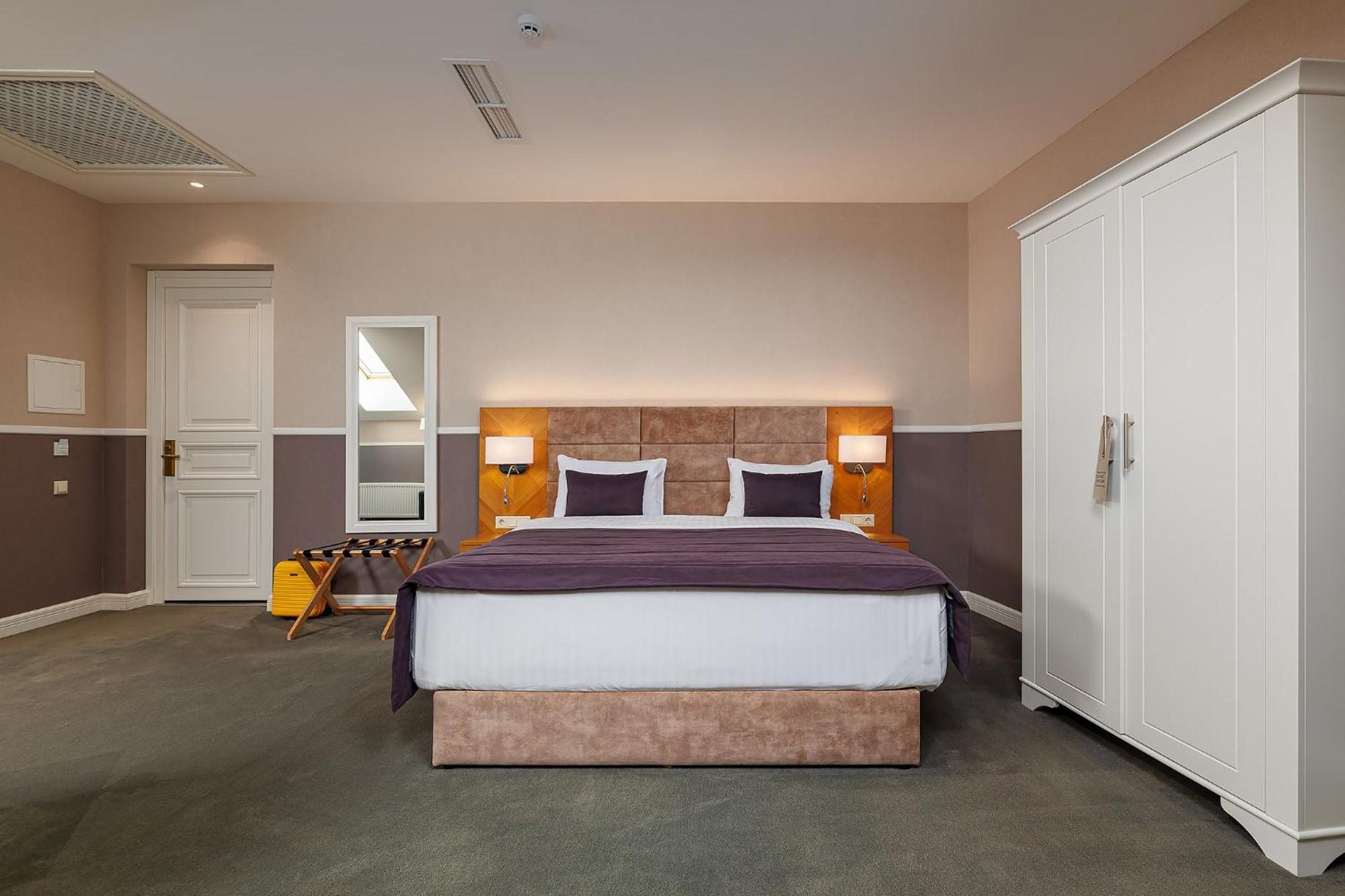
A plainly finished hotel bedroom with a padded headboard, a white wardrobe and a suitcase on a rack.

These are small houses by the standards of the rest of the guide, and several of them are also workplaces. Rooms differ from one another because the buildings differ from floor to floor, which is why the entries suggest asking where a room sits.

The entries at a glance

01 / 06

Le Grand Mazarin

Paris, France
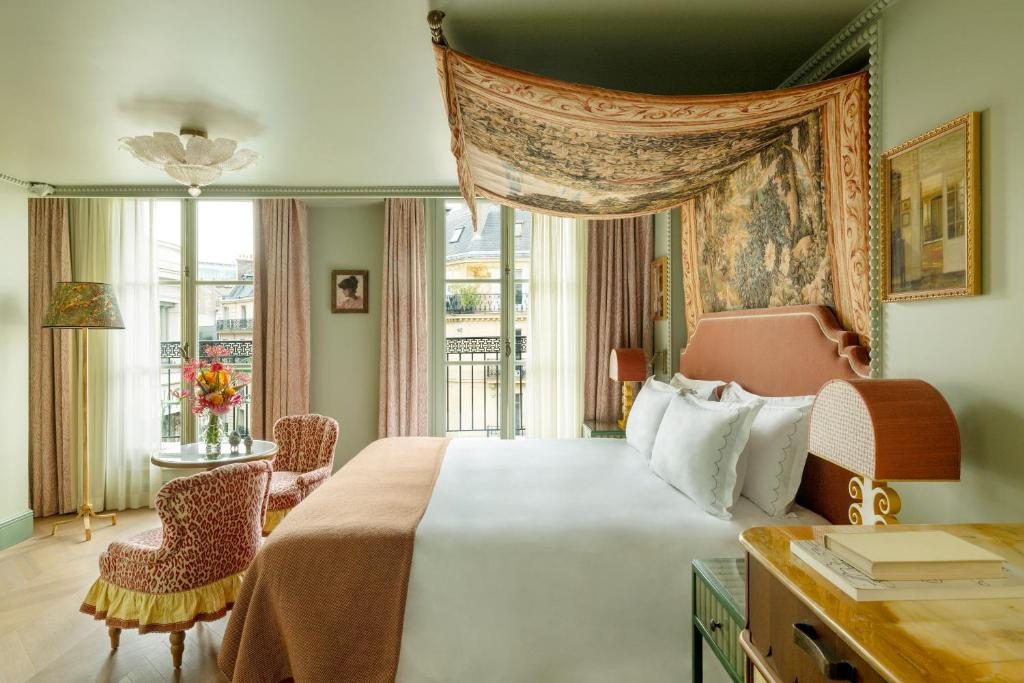
A hotel bedroom with pale walls, a tapestry canopy over the bed and a view of city rooftops.

In brief

Le Grand Mazarin occupies a corner house in the Marais, in the fourth arrondissement of Paris. It opened as a hotel after a full refit of an existing building rather than as new construction. The interior is the point of the place: painted ceilings, patterned fabrics and heavy colour run through the public rooms and carry on into the bedrooms.

The building

From outside the house is an ordinary stone city block, with shopfronts at street level. Inside, a restaurant, a bar and a small library sit on the lower floors, and a swimming pool was put into the vaulted cellar. Bedrooms are stacked above and vary in size, as they do in most converted Paris houses.

Things to note

The Marais is dense and stays lively at night, and rooms facing the street feel it. There is no large lobby, so arrivals with luggage are close-quartered. Ask which floor a room sits on, since the older upper parts of the house hold the smallest of them.
02 / 06

Château Royal Berlin

Berlin, Germany

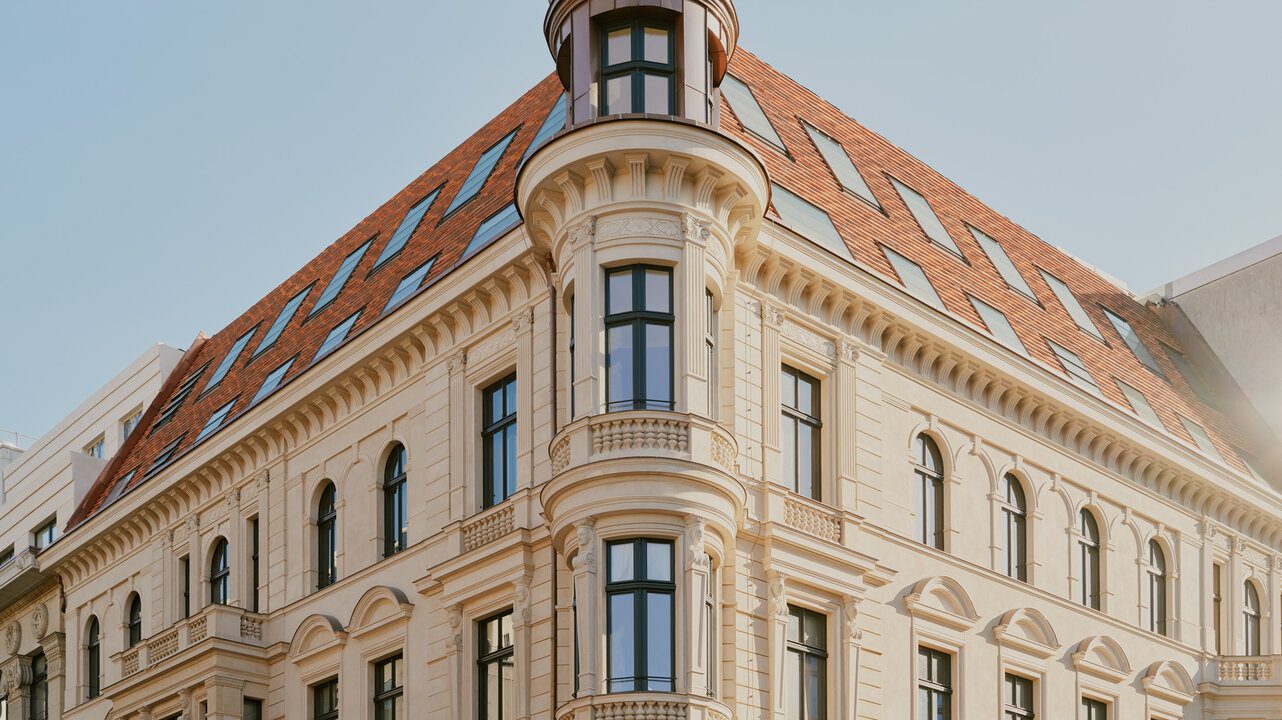
A cream stone corner building with a turret and a tiled roof on a city street.

In brief

Château Royal Berlin stands on Unter den Linden in Mitte, a short walk from the Brandenburg Gate. The hotel was made by joining historic houses on the street to a newer part behind them, so the plan runs deep rather than wide. Works from a collection hang through the corridors and public rooms, which is what places it in this section.

The building

The street front keeps the older façades, while the newer part of the house sits behind and above them. A restaurant and a bar take the ground floor and open towards the pavement. Upstairs the rooms are panelled and lined with fabric, and the stair and corridor walls carry the hung works.

Things to note

Unter den Linden is a main route through the centre and stays busy well into the evening. The two halves of the house differ in feel, so ask which one a room sits in. Parts of a collection are moved from time to time, and no particular work can be promised.

03 / 06

Palazzo Daniele

Gagliano del Capo, Italy

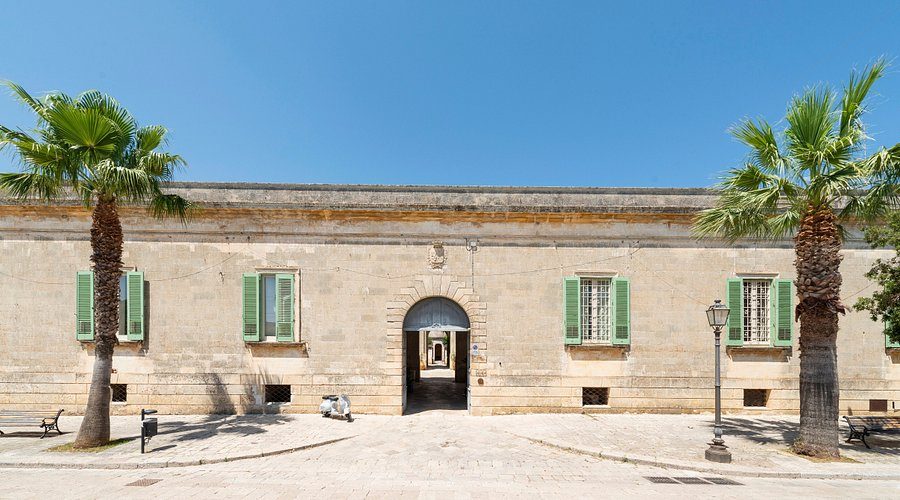
A low stone house with green shutters and a central arched doorway, framed by palm trees.

In brief

Palazzo Daniele is a nineteenth-century house in Gagliano del Capo, a small town at the southern end of Salento in Puglia. It stayed in one family and was later opened to guests with very little added. Rooms were left largely bare and contemporary works were placed in them, which is the reason the house is read as an art hotel.

The building

The plan is the usual one for a southern palazzo: high vaulted rooms opening off each other, a stair hall, and a walled garden with a pool behind. Painted ceilings and stone floors were cleaned and kept rather than replaced. Furniture is sparse, so the volume of each room is the first thing noticed.

Things to note

Gagliano del Capo is quiet and small, and a car helps for reaching the coast. The house holds few rooms, so summer dates go early. Meals are arranged with the house rather than picked from a long local list, so ask what is available when booking.

04 / 06

Numeroventi

Florence, Italy

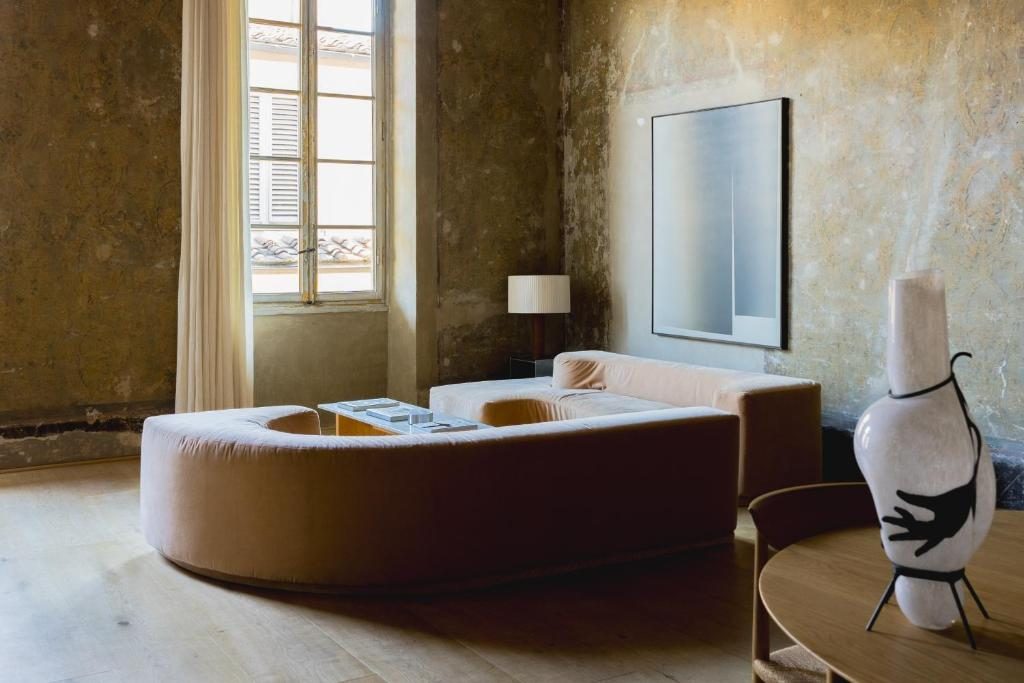
A high room with plastered walls, a curved sofa and a tall window.

In brief

Numeroventi occupies part of a palazzo in central Florence, on a narrow street east of the cathedral. It works in two ways at once: as a residency that hosts artists and designers for periods of work, and as a set of apartments let to guests. Studios, exhibitions and stays share one address, which is unusual for a house of this kind.

The building

The palazzo presents a plain masonry front to the street, with a courtyard and a stair behind it. Upper floors hold high frescoed rooms turned into apartments and studios, keeping the old surfaces where they survived. Ground-level spaces are used for shows and for events tied to the residency programme.

Things to note

Because the house is also a workplace, part of it may be given over to a project during a stay. Apartments differ from one another, so ask what a given one includes before booking. The street is central and reached on foot, and there is no parking at the door.

05 / 06

La Divine Comédie

Avignon, France

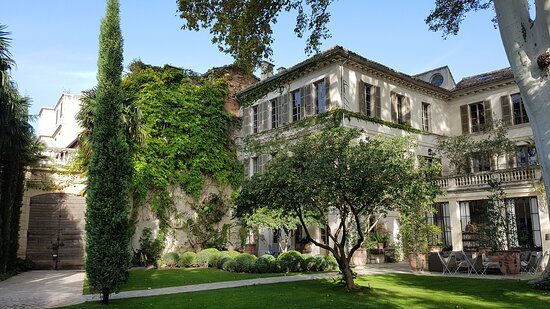
A walled garden with a lawn, a cypress tree and a pale stone house behind it.

In brief

La Divine Comédie is a private townhouse in the old centre of Avignon, inside the walls and near the Palais des Papes. It is run as a small guest house rather than as a conventional hotel, with a handful of rooms and a garden behind the street front. Furniture, sculpture and pictures collected by the owner fill the interior.

The building

The house is a hôtel particulier: a closed front on the street, and behind it a walled garden with mature trees, a pool and a terrace. Reception rooms open onto the garden at ground level. Bedrooms and suites are placed on the upper floors and in outbuildings, each of them furnished differently.

Things to note

The centre of Avignon is pedestrian in parts and awkward to drive into, so ask about arrival and parking. The house is small, and the summer theatre festival fills the town. Breakfast and any other meals are arranged directly with the owners rather than booked online.

06 / 06

Villa Lena

Palaia, Tuscany, Italy

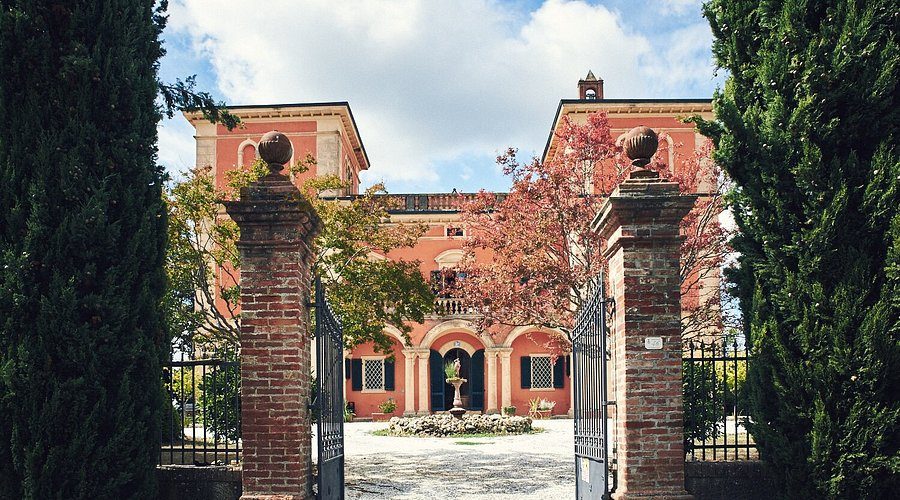
A terracotta villa with twin towers seen through an open brick gateway.

In brief

Villa Lena stands on a hillside estate near Palaia, between Florence and Pisa in Tuscany. The property brings together a working farm, holiday apartments and a foundation that hosts artists in residence for part of the year. Guests and residents overlap on the same land, and studios and shows form part of what goes on there.

The building

A nineteenth-century villa sits at the top of the estate, with farm buildings and cottages spread down the slope and converted into apartments. A restaurant, a pool and studio spaces are placed among them. Woods and olive terraces run out from the buildings in every direction, and tracks rather than roads connect one part of the estate to the next.

Things to note

The estate is reached along unsurfaced roads, and a car is effectively required. The residency runs seasonally, so what is open varies through the year. Apartments differ in size and in how far they stand from the restaurant, which is worth asking about before choosing.

Before you use this page

Bell Underest is an independent reference and sells nothing. Everything here comes from published sources and from the properties' own material, and any of it can change without notice. Collections move and rooms are refitted. The guide has no connection with any hotel listed. Confirm every detail with the property before you travel.

Back to top